

Viewing 151 - 160 out of 568
Article List

Feline
Family Cats and Pregnant Women: Take Measures to Prevent Toxoplasmosis Infection
Nothing must spoil the joys of becoming a new parent. Not even your pets. But family cats with normal, every day habits can pose a risk to expectant women. Women's immune systems can be disturbed by a parasite carried in fecal matter. If you're the primary caretaker of your family's feline friend it
Feline
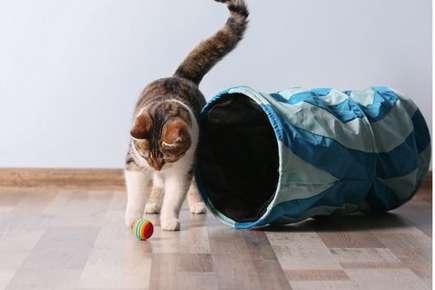
Create an Environment Your Cat Will Love
The Journal of Feline Medicine and Surgery confirms that feline emotional wellbeing, behavior and physical health are a result of how comfortable they are in their environment. Understanding how our cats interact with their environment can help us create a space for owners and cats to mutually thrive

Feline
Catnip: Why Cats Love It
Few things stimulate a cat's pleasure faster than catnip. Exposure to this simple herb can reveal a new side to their feline personality. Many cats will go crazy at the smell of this plant. Catnip has a reputation of being a feline drug and many cat owners wonder if it is safe to give it to their pet.

Feline
Zoonosis
Zoonosis refers to diseases that can be transmitted to humans from animals. In particular, they occur when an infected animal passes on bacteria, parasites, fungi or viruses to humans through scratches, saliva, feces and urine. Vectors (e.g., organisms like fleas and ticks) can also carry zoonotic diseases

Choosing Your Pet
Sugar Gliders
Thinking of getting a sugar glider? These tiny marsupials are energetic and friendly, making them popular choices as pets. Though they weigh less than a half-pound, they're more closely related to kangaroos than they are flying squirrels. If you think a sugar glider would make an ideal pet for your family,

Pet Health
Epilepsy
Epilepsy (often referred to as a seizure disorder) is a chronic neurological condition characterized by recurrent unprovoked seizures. It is commonly controlled with medication, although surgical methods are used as well. Epileptic seizures are classified both by their patterns of activity in the brain

Living With Your Pet
Seasonal Care
Heat Stroke Heatstroke may kill or seriously injure your pet—but it can easily be avoided by adhering to the following tips. Never leave pets in cars on warm days. Exercise your pet during the cool part of the day. Look out for rapid breathing, loud panting or staggering; these can be signs of dehydration,

Living With Your Pet
Recognizing Illnesses
Only a healthy pet is a happy companion. Assuring your pet's daily well-being requires regular care and close attention to any hint of ill health. The American Veterinary Medical Association therefore suggests that you consult your veterinarian if your pet shows any of the following signs: * Abnormal

Living With Your Pet
The Decision
Your decision is a personal one, but it need not be a solitary one. Your veterinarian and your family and friends can assist and support you. How Do I Make The Decision? Your relationship with your pet is special, and you are responsible for its care and welfare. Eventually, many owners are faced with

Living With Your Pet
Camping with Pets
Camping with pets presents its own challenges. Skunks, raccoons, porcupines, snakes, and other wildlife can bite or otherwise injure your pet. Keep your pet within sight and on a leash. Be considerate of other campers. Be sure to ask your veterinarian about flea, tick and heartworm prevention.
Location
Find us on the map
Monday:
By Appointment Only
Tuesday:
By Appointment Only
Wednesday:
By Appointment Only
Thursday:
By Appointment Only
Friday:
By Appointment Only
Saturday:
By Appointment Only
Sunday:
By Appointment Only
Newsletter Signup
Sign up for more articles
Please do not submit any Protected Health Information (PHI).
Testimonials
Reviews By Our Satisfied Clients
"Incredible team!! Always willing to help and explains everything!! So glad to have them in the area!!"
Lori L. - Athens, OH